

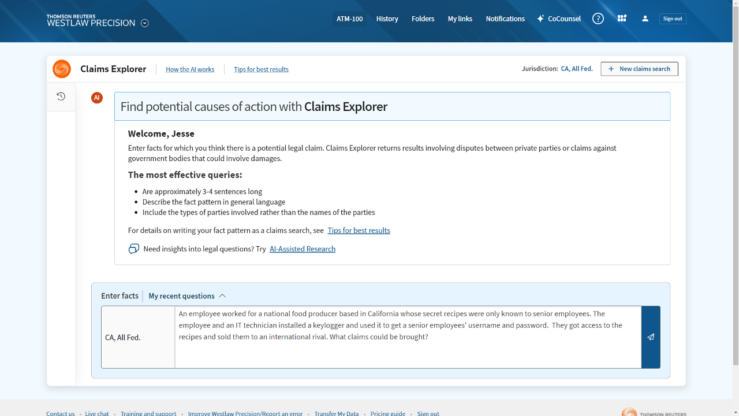
Today Thomson Reuters introduced Claims Explorer, a new generative AI skill available in Westlaw Precision with CoCounsel, that simplifies claims research, saves time, and reduces the risk of missing an important cause of action. The new skill enables legal professionals to enter facts and identify applicable claims or counterclaims. Using generative AI to simplify claims research, …
Uncategorized
AALL Sneak Peek: How Thomson Reuters Will Connect With Customers in Chicago
Legaltech and legal information professionals are preparing to head to Chicago for the American Association of Law Libraries (AALL) Annual Meeting & Conference, and Legal Current has a look at how Thomson Reuters will connect with customers there. CoCounsel Drafting The AALL event offers opportunities to learn about the latest legal product enhancements, including CoCounsel …
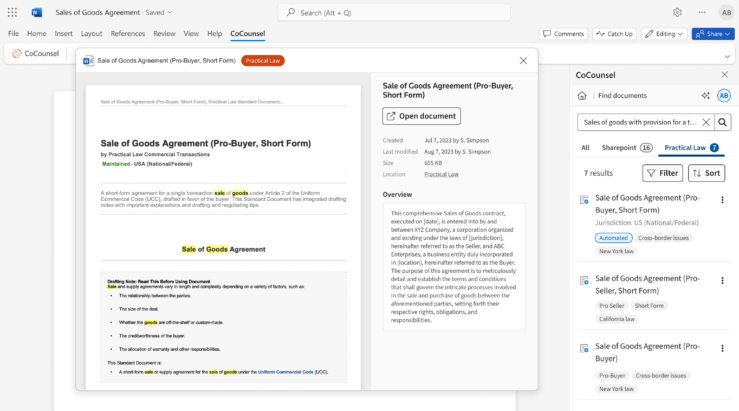
CoCounsel Drafting: What Customers Are Saying
Today Thomson Reuters launched CoCounsel Drafting, an end-to-end drafting solution that streamlines and improves the drafting process for legal professionals within Microsoft Word. It’s the latest set of capabilities available for CoCounsel, the first professional-grade GenAI assistant from Thomson Reuters. With the new solution, customers have noted they can easily and quickly move through the …

Trowers & Hamlins Hosts Fourth Annual Hackathon Powered by Thomson Reuters CoCounsel
Trowers & Hamlins, an international law firm, hosted a legal hackathon powered by Thomson Reuters CoCounsel. As part the of the event, more than 50 students used CoCounsel to address everyday legal issues that many lawyers face in practice. “Despite all the excitement and progress to date, we are just scratching the surface of what …
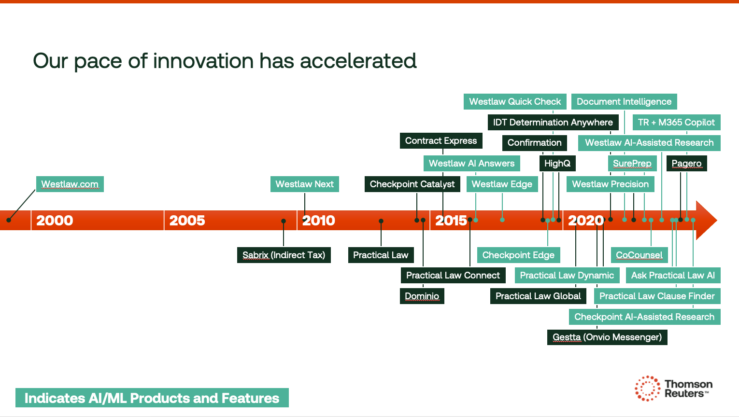
Two years of unprecedented progress – Law firms deriving tangible value from Thomson Reuters AI
As we approach the two-year mark since we launched Westlaw Precision, the industry has seen unprecedented development – in many ways instigated by the launch of Chat GPT in November 2022, customers and software developers alike never experienced such exponential opportunity (and some would argue risk). And here at Thomson Reuters – we haven’t stood …

Webinar Recap: Raghu Ramanathan and David Wong on Evaluating AI Vendors
Raghu Ramanathan, president, Legal Professionals, Thomson Reuters, and David Wong, chief product officer, Thomson Reuters, shared their insights on evaluating AI vendors during a webinar with Morgan Lewis partner Rahul Kapoor and associate Shokoh Yaghoubi. They offered advice on evaluating a vendor’s technology expertise, support services, and transparency. Also, they shared how firms and organizations …

National Center for State Courts, Thomson Reuters Institute Form Strategic AI Partnership
The National Center for State Courts (NCSC) and the Thomson Reuters Institute, part of Thomson Reuters, today announced the launch of a strategic artificial intelligence (AI) partnership called the Thomson Reuters Institute/National Center for State Courts AI Policy Consortium for Law and Courts. This joint initiative is designed to inform and educate the judiciary about …
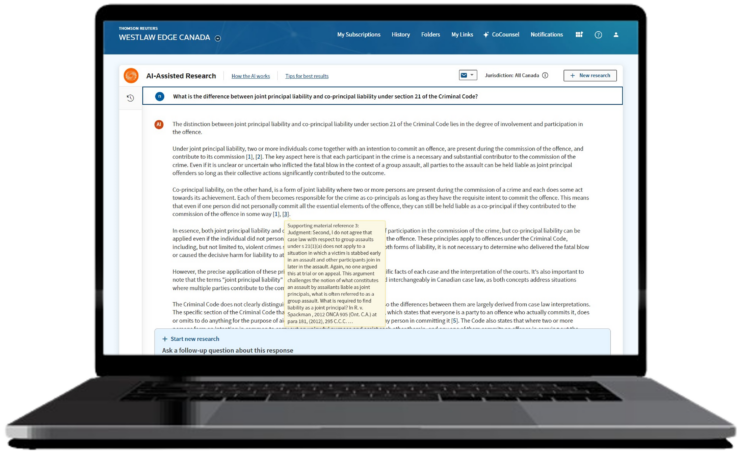
Thomson Reuters Launches Westlaw Edge Canada with CoCounsel
Thomson Reuters today announced the rollout of Westlaw Edge Canada with CoCounsel, enabling Canadian legal professionals to complete time-consuming research tasks faster with enhanced technological capabilities and the integration of generative AI. Westlaw Edge Canada with CoCounsel includes AI-Assisted Research, which allows for a conversational chat experience that uses generative AI to provide answers to …
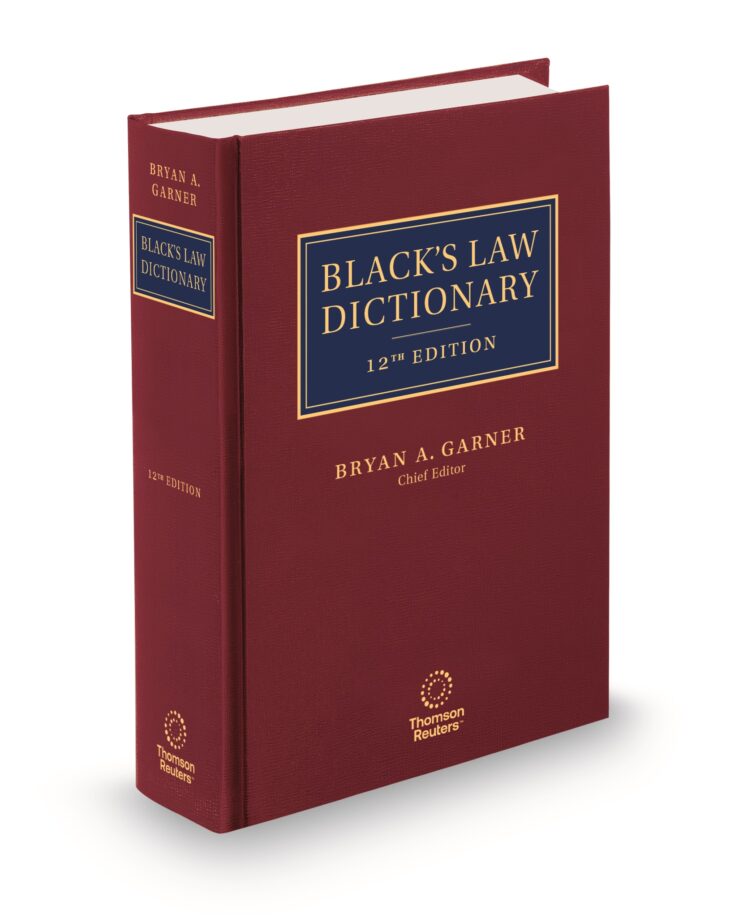
“Lawyers need to be really sensitive semanticists:” David Lat and Bryan Garner on Black’s Law Dictionary, 12th Edition
Two leading legal minds – David Lat and Bryan Garner, chief editor of Black’s Law Dictionary – share their insights on the 12th edition of the iconic law book in a new podcast episode. They discuss developing the most widely cited legal book in the world, the evolutions of technology and language, and more. Below …
Thomson Reuters Releases 12th Edition of Black’s Law Dictionary
Deepfake, ghost gun, make-my-day statute, and shadow docket are among the 2,500 new terms in Black’s Law Dictionary, 12th Edition, released today by Thomson Reuters. The iconic dictionary includes definitions of more than 70,000 law-related words and phrases, plus more than 5,000 scholarly and judicial quotations on legal terminology. Every page in the 12th edition …
